Thursday, October 7, 2010

Is increasing minimum wage the answer? A decade ago in Kalamazoo, we said "no"

A new poll released yesterday by the Public Religion Research Institute, shows that two-thirds of Americans (67 percent) support an increase in the minimum wage from $7.25 an hour to at least $10 an hour.

One could say that the easiest way to reduce poverty is by offering more jobs that pay higher salaries so that everyone has the opportunity to succeed. But would those who live now in poverty really have a chance at these opportunities? Would they be competing with more educated, training and skilled workers? Would a minimum wage hike hurt small businesses?

These are all challenging questions that must be addressed when speaking about this topic. In Kalamazoo in 2001, the community decided that a living wage was not the best way to address the high percentage of poverty in the area. A few years later, the Kalamazoo County Poverty Reduction Initiative was formed to address the problem. Soon afterward, Kalamazoo leaders unveiled the Kalamazoo Promise as a way to support children and families living in poverty.

Raising the minimum wage would certainly have a positive impact on persons who currently make the amount. However, it could potential devastate an economy still struggling to improve. Small businesses could flounder and more jobs could be cut.

Is increasing the living wage the long-term answer? What supports for businesses would we have to include to make it affordable?

Read the Full Article: http://www.mlive.com/michigan-job-search/index.ssf/2010/10/poll_two-thirds_of_americans_support_min.html

Tuesday, October 5, 2010

NPR Reports on the 'Disintegration' Of America's Black Neighborhoods


A new book written by Eugene Robinson details the splintering of African-American communities and neighborhoods. His new book is called Disintegration: The Splintering of Black America. Robinson grew up in a segregated world in Orangeburg, S.C., which had a black side of town and a white side of town. It also had a black high school and a white high school; and "two separate and unequal school systems."

But as segregation faded, pockets of inequality grew even stronger. The story explains:

"People who had the means and had the education started moving out of what had been the historic black neighborhoods," Robinson explains.

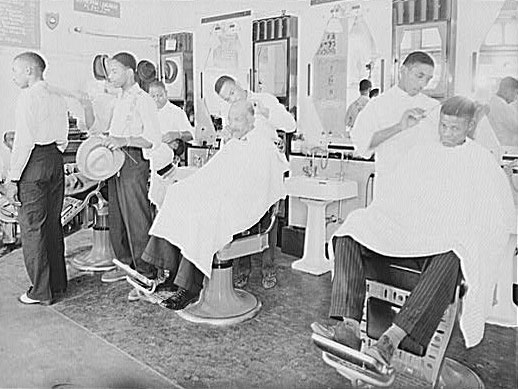
He cites Washington, D.C.'s Shaw neighborhood as a prime example of this because of how Shaw was home to a vibrant black community and a thriving entertainment scene in the 1930s through the 1950s. By the '70s, Shaw had become a desolate, drug-ridden area.

"In city after city, African-American neighborhoods, that …once had been vibrant and in a sense whole — disintegrated," Robinson says.

He attributes that change to African-Americans taking advantage of new opportunities, resulting in a more economically segregated community.

"There have always been class distinctions in the black community," Robinson says, "but what I believe we've seen is an increasing distance between two large groups, which I identify as the Mainstream and the Abandoned."

Robinson says that while a "fairly slim majority" of African-Americans entered the middle class, a large portion of the community never climbed the ladder. It's getting harder and harder to catch up, he says, "because so many rungs of that ladder are now missing."

So as formerly segregated neighborhoods begin to gentrify; rents increase and longtime residents get pushed out.

"What happens to this group that I call the Abandoned is that they get shoved around — increasingly out into the inner suburbs — and end up almost out of sight, out of mind," Robinson says.

Read or listen to the full story: http://www.npr.org/templates/story/story.php?storyId=130333806&sc=fb&cc=fp

Sunday, October 3, 2010

The Political Candidates Don't Come Here (Where the Poor Are) Often


"The political candidates don’t come here very often. Not to Veronica Almaguer’s office.

Not to the place where all those issues — such as unemployment and health care and education and hunger — collide into a single look of desperation from the other side of her desk.

If the candidates came here, she says, maybe it wouldn’t take so long to find a solution to the state’s high unemployment, falling incomes and rising poverty.

“We’re seeing a significant increase in the number of people who need help,” she says. “We have people who are unemployed for the time. They lost their jobs and their medical insurance. And many people have never had to ask for help before.”

Almaguer is the prescription assistance coordinator at Cristo Rey Community Center, a charity on Lansing’s High Street that offers a range of services, including a free medical clinic and food bank."

www.lansingstatejournal.com/article/20101003/NEWS01/310030004/1001/NEWS


Saturday, October 2, 2010

ABC News Report on the Increase in Poor and Near Poor in America

Walmart Sales Spike Last Day of the Month When Benefits Checks Come In

Take a trip to one of those 24-hour Walmarts on the last day of every month, and you'll get a glimpse into the lives of low-income families trying to get by. At one location in Fredericksburg, Va., at around 11 p.m., families start to load up on necessities like diapers and groceries.

People like Tracy and Martin Young live nearby, and for the pair in their early 30s, it's a chance to shop quietly without their five children, two of whom are teenagers. Each is pushing a shopping cart overflowing with food. There's mac and cheese, bags of cereal and cans of evaporated milk. Most of this has to last for the whole month.

www.npr.org/templates/story/story.php?storyId=130272928


Homeless Men Sent to Prison While Ring Leader Evades the Law

Staying at a Grand Rapids homeless shelter, Guy Robert Clawson was offered a cash "job" that covered his beer or liquor for the day.

For years, he worked odd jobs for cash. This seemed no different.

The offer came from a guy named Malik. Clawson and other homeless people could earn $15 to $20 a day buying cold tablets that contained pseudoephedrine, a restricted product that was used to make methamphetamine, authorities said.

Malik drove to stores throughout West Michigan, and supplied cash for the pills. The buyers got $2.50 a box.

www.mlive.com/news/grand-rapids/index.ssf/2010/10/homeless_men_sent_to_prison_wh.html


Thursday, September 30, 2010

The Gubernatorial Candidates on Early Childhood Education

The Center for Michigan does a nice job of highlighting the educational support that both candidates for Governor, Mr. Snyder and Mr. Bernero, have for early childhood education:

"In August, both Republican gubernatorial candidate Rick Snyder and his Democratic opponent, Virg Bernero spoke in support of preschool at the Sandbox Party Convention, an event to help spread the word about the economic impact of early childhood education in the state.

“Reform Michigan’s Educational System” is Number 8 on Snyder’s 10-point plan to reinvent Michigan.

And Bernero has often said that education is economic development.

Bernero campaign spokesman Cullen Schwarz said it is now a widely accepted fact that preschool education is vital for the cognitive development of children and is a major factor in future academic success.

“Virg’s goal is to have every four-year-old in Michigan enrolled in pre-school by the end of his first term,” he said. “Michigan needs a strong pre-K program that has uniform benchmarks and quality standards to ensure that all our children are getting a jump-start on gaining the tools to succeed in a global economy.”

Snyder campaign spokesman Bill Nowling said Snyder does not yet have a specific preschool proposal, but believes the state must refocus its effort on 0-5 learning because of its proven return on investment. That will require using what Snyder calls “value for money budgeting.”

The full report can be found at:

www.thecenterformichigan.net/special-report-where-bernero-and-snyder-stand-on-early-education/

Wednesday, September 29, 2010

Michigan Census Data: Income Drops, Poverty and Uninsured Increase

On Tuesday, the U.S. Census Bureau released data on income, poverty and health insurance for 2009, a statistical snapshot of the depths of the nation's economic crisis.Those numbers tell a story that Michigan already knew, at least in its basic outlines. The median income dropped by 6.2 percent, more than in any other state. The numbers of people living in poverty swelled by 159,000, many of them children. The numbers of uninsured grew.

www.lansingstatejournal.com/article/20100929/NEWS01/9290328/Census-data-show-income-drop-rise-in-poverty-and-uninsured-in-Michigan

Tuesday, September 28, 2010

Carnaval Latino highlights values, heritage and successes of Hispanic community in Kalamazoo

Last Saturday, the Hispanic American Council celebrated their heritage with the first ever "Carnival Latino." The carnival included traditional Hispanic and Latino food, music and cultural fare. In Kalamazoo, there are about 3,600 residents of Hispanic or Latino descent, making up about 5 percent of the city’s population. However, they have a significant impact on the community at large.

The Hispanic American Council provides a variety of programs that engage the youth of their community. They have also brought with them inspiring stories of triumph, as the one told about Francisco Vargas, owner of La Mexicana Market on Portage Road.

Seventeen years ago, Vargas came to the United States from Mexico as a migrant farm worker. Like many immigrants, he encountered challenges along the way, having difficulty with English and sacrificing much so that his family could have a better life.

But he worked tirelessly and now owns one of the Edison Neighborhood’s most popular markets — which sits just several hundred feet from where Vargas once sold vegetables out of his pickup truck when he was working in the fields.

Vargas’ son, Jairo Vargas, said that his father’s determination is an inspiration for all.

“He gave up everything to come here,” he said. “He had nothing. It’s great to see how far he made it and it goes to show that it really doesn’t matter who you are. If you work hard, you can make it.

“He’s pretty inspiring to everyone. You can do whatever you want if you are willing to make sacrifices and have the dedication.”

“It’s a Cinderella story,” said Mercedes, 40, who at age 16 came to the U.S. from Nicaragua to seek political asylum after a revolution there.

Their stories reflect the toil that so many Hispanic families undertake to make a better life for themselves here.

“Our stories are of family values and determination,” Mercedes said. “We know that the impossible might take longer for us, but we will get there. We are hard workers and we are determined.”
Read the full article at: http://www.mlive.com/news/kalamazoo/index.ssf/2010/09/carnaval_latino_highlights_val.html

Monday, September 27, 2010

'Day of Dignity' serves 650 needy individuals in Kalamazoo


The annual 'Day of Dignity' organized by Muslim organizations and other community partners served 650 individuals in Kalamazoo last Saturday. They received items such as sweatshirts, underwear and socks to hot sandwiches and fresh fruit to personal hygiene kits.
It was the fourth year in a row that the event, funded by Islamic Relief USA and hosted by several area Muslim organizations, was put on in the city.

“It’s a chance for us to give back to our community,” said Zarinah El-Amin Naeem, co-coordinator of the event. “Sharing your wealth with those in need is an obligation we all have.”

Christina Carswell was surrounded by her godchildren, cousins and nieces, bags of notebooks, mittens and other goods set in a pile by a statue of King in the center of the park.

“For those who can’t afford these things this year, this really helps,” she said. “It’s the little things that count.”
Last year the PRI covered the event with a video to showcase the event. You can watch the video below or at: http://www.youtube.com/watch?v=zRVF7YQvOao


Read the full article on mlive at: http://www.mlive.com/news/kalamazoo/index.ssf/2010/09/kalamazoo_area_muslim_organiza.html